Description
LLM code assistants today are powerful but fundamentally untrustworthy: they hallucinate logic, mis-handle corner cases, and provide no guarantees. This workshop centers a different goal: AI for Verifiable Coding, where human-aligned agents collaborate with proof assistants, model checkers, SAT/SMT solvers, and static analyzers to co-design specifications, code, proofs, and heuristics with machine-checkable guarantees.
We argue that such agents must be built very differently from generic code LLMs. Verifiable generation requires rich specification languages (from contracts and types to temporal logics and proof terms), symbolic backends, and structured interaction loops where models propose artifacts and tools refute, repair, or certify them. Beyond code (Lean, Rust/Verus, Coq, Isabelle, Dafny, etc.), these agents must support autoformalization of informal requirements and mathematics, proof search for complex verification conditions, and heuristic discovery, e.g., invariants, lemma libraries, and solver strategies, that amplify classical formal-methods tools.
We will highlight opportunities and hard problems unique to this setting: aligning learned models with human intent expressed as specifications and proofs; orchestrating multi-agent toolchains that mix neural search with symbolic reasoning; scaling autoformalization beyond toy examples; designing training signals from compiler, verifier, or theorem-prover feedback; and building evaluation protocols that track end-to-end guarantees, not just pass@k. The goal is a roadmap toward collaborative agents that help humans understand, control, and verify the software and systems they generate.
Call for Paper Topics
This workshop brings together researchers in LLMs, formal methods, programming languages, and HCI to discuss questions including (but not limited to):
- Neuro-symbolic architectures: LLM agents integrated with proof assistants, model checkers, solvers, static analyzers, and compiler feedback; verifier-guided training and inference.
- Specification generation and quality: autoformalization, specification mining, ambiguity and inconsistency detection, property-based validation, and human-guided refinement.
- Proof search and engineering: premise selection, tactic learning, proof repair, maintenance, scalability, and compatibility across theorem-proving systems.
- Program verification and repair: deductive verification, model checking, symbolic execution, abstract interpretation, testing, debugging, certified repair, equivalence checking, and behavior preservation.
- Verification applications: security, smart contracts, memory safety, supply chains, access-control policies, network configurations, infrastructure-as-code, and distributed protocols.
- Verification of and for AI: formal validation of generated outputs, runtime monitoring of agents, verified guardrails, and constrained tool use.
- Solver and trusted infrastructure: scalable SAT/SMT solving, learned heuristics, proof certificates, independent checking, trusted computing bases, and verifier validation.
- Human-centered verification: mixed-initiative interfaces, explanations, trust calibration, and accessibility for developers without formal-methods expertise.
- Benchmarks and deployment: datasets and metrics for end-to-end guarantees, scalability studies, reproducibility, negative results, and industrial experience.
Confirmed Speakers / Panelists (A-Z by Last Name)

Leonardo de Moura
VP and Distinguished Scientist, Amazon Web Services

Emily First
Assistant Professor, Rutgers University (New Brunswick)

Vijay Ganesh
Professor, Georgia Institute of Technology

Patrick Li
Harmonic
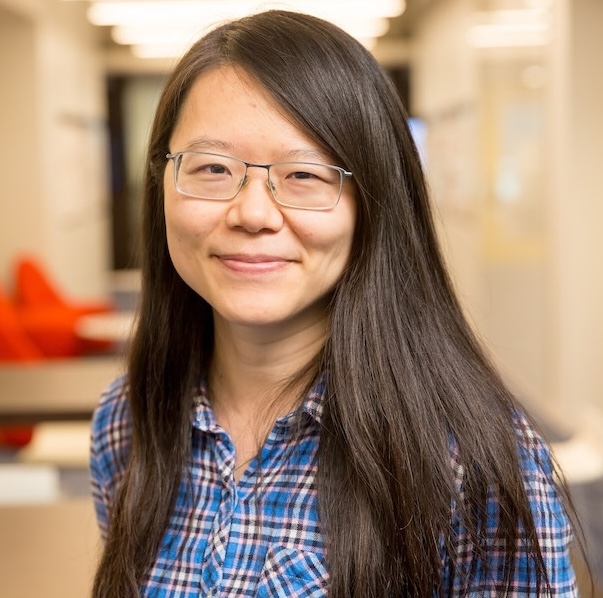
Shan Lu
Professor, University of Chicago

Baishakhi Ray
Associate Professor, Columbia University

Bartley Richardson
CrowdStrike

Shubho Sengupta
CTO, Axiom Math

Patrick Shafto
DARPA & Rutgers University

Dawn Song
Professor, University of California, Berkeley
Call for Papers (Research Paper Track)
We provide more submission details: Guidance for VeriCodeGen CFP at NeurIPS 2026.OpenReview submission portal: https://openreview.net/group?id=NeurIPS.cc/2026/Workshop/VERICODGEN
Paper format: Prepare your paper with
neurips_2026_vericode_workshop.tex and neurips_2026_vericode.sty, both in the Overleaf project.
- Abstract Submission Deadline: September 11, 2026
- Paper Submission Deadline: September 13, 2026
- Review Deadline: September 27, 2026
- Acceptance/Rejection Notification Date: September 29, 2026
- Import Accepted Papers: October 4, 2026
- Camera-Ready Submission: October 14, 2026
- Workshop Date: December 12 (Atlanta)
This research paper track and the competition track are two separate tracks with different submission requirements and evaluation criteria.
Schedule
All times are in Atlanta Time (GMT-4).
| Atlanta Time (GMT-4) | Event |
|---|---|
| 8:00-8:05 | Opening |
| 8:05-9:00 | Awards & Orals |
| 9:00-9:40 | Invited Talk 1 |
| 9:40-10:20 | Invited Talk 2 |
| 10:20-11:00 | Invited Talk 3 |
| 11:00-12:00 | Sponsors' Talks |
| 12:00-14:00 | Lunch |
| 14:00-14:40 | Invited Talk 4 |
| 14:40-15:40 | Panel |
| 15:40-16:20 | Invited Talk 5 |
| 16:20-17:00 | Invited Talk 6 |
Challenge (Competition Track)
Can agents make Lean proofs better, not just correct?
The Lean Refactor Arena is a two-track competition in verified proof refactoring. Participants build systems that rewrite existing Lean 4 proofs — drawn from active formalization projects and competition mathematics — while preserving their theorem statements and correctness.
Choose a track
Both tracks solve the same benchmark under different resource constraints.
Closed-source LLM
Build a harness around closed-source frontier LLM APIs.
Budget: ≤ US$3 API spend per problem.
Open-source LLM
Post-train open-source models, build a harness around them, or both.
Budget: must run on 4× 80 GB A100 · ≤ 48 h for the full benchmark.
How entries are scored
Every valid proof is evaluated on three complementary dimensions.
Proof size
Reduce proof-source token count compared with the reference proof.
Elaboration efficiency
Reduce the computational effort Lean uses to elaborate the proof.
Zero-shot version transfer
Keep the same proof compiling across other Lean toolchains.
Competition timeline
| Phase | Dates | What happens |
|---|---|---|
| Warm-up | Now – Oct 31, 2026 | The public development subset and the leaderboard are live. Submissions are accepted on the practice benchmark. |
| Full benchmark | November 1, 2026 | The full benchmark is released and the leaderboard is refreshed. Entries are evaluated on the full benchmark from here on. |
| Deadline | November 8, 2026 | Proof and code submissions close on the Arena site. Tech reports are due on OpenReview: https://openreview.net/group?id=NeurIPS.cc/2026/Workshop/VERICODEGEN_Competition |
| Review & awards | November 22, 2026 | The organizers reproduce the top entries, and the winners of both tracks are announced. |
| Workshop | December 12, 2026 | Each track winner gives a dedicated talk at the workshop in Atlanta. |
Prize amounts and benchmark size are provisional and may be adjusted before September 1, 2026.
Submission and participation
Prepare your entry, or help us expand the benchmark.
Every entry needs a tech report
Tech reports use the competition template (not the one for the research paper track): neurips_2026_vericode_workshop_competition.tex with neurips_2026_vericode_competition.sty, both in the same Overleaf project linked below. At least 4 pages, up to 9 pages, and submitted on OpenReview: https://openreview.net/group?id=NeurIPS.cc/2026/Workshop/VERICODEGEN_Competition
Tech reports are single-blind, so please do not anonymize them. We will invite Lean repository maintainers to review your submission and verify that it reproduces, which may involve contacting you directly. Include your real names, affiliations, and contact information so organizers can reach you about your code and submission during review.
Desk rejection: a missing required section (Approach, Models, Budget, Reproduction), exceeding your track’s budget, under-reporting what the run cost, not disclosing every model, or a run the organizers cannot repeat.
How to contribute
The benchmark grows with the community. We are looking for more Lean proofs to refactor, and we would love your input. A good candidate problem is long (so there is room to shorten), expensive to compile (it burns heartbeats, so there is real search in the proof), and stable across toolchains (the declaration appears verbatim at several Lean snapshots).
Maintain or know a Lean development with proofs like that? Read the contribution guide
Organizers

Wuyang Chen
Assistant Professor, Simon Fraser University

Soonho Kong
Principal Applied Scientist, Amazon Web Services

Hakjoo Oh
Professor, Korea University

Jingxuan He
Researcher, NVIDIA
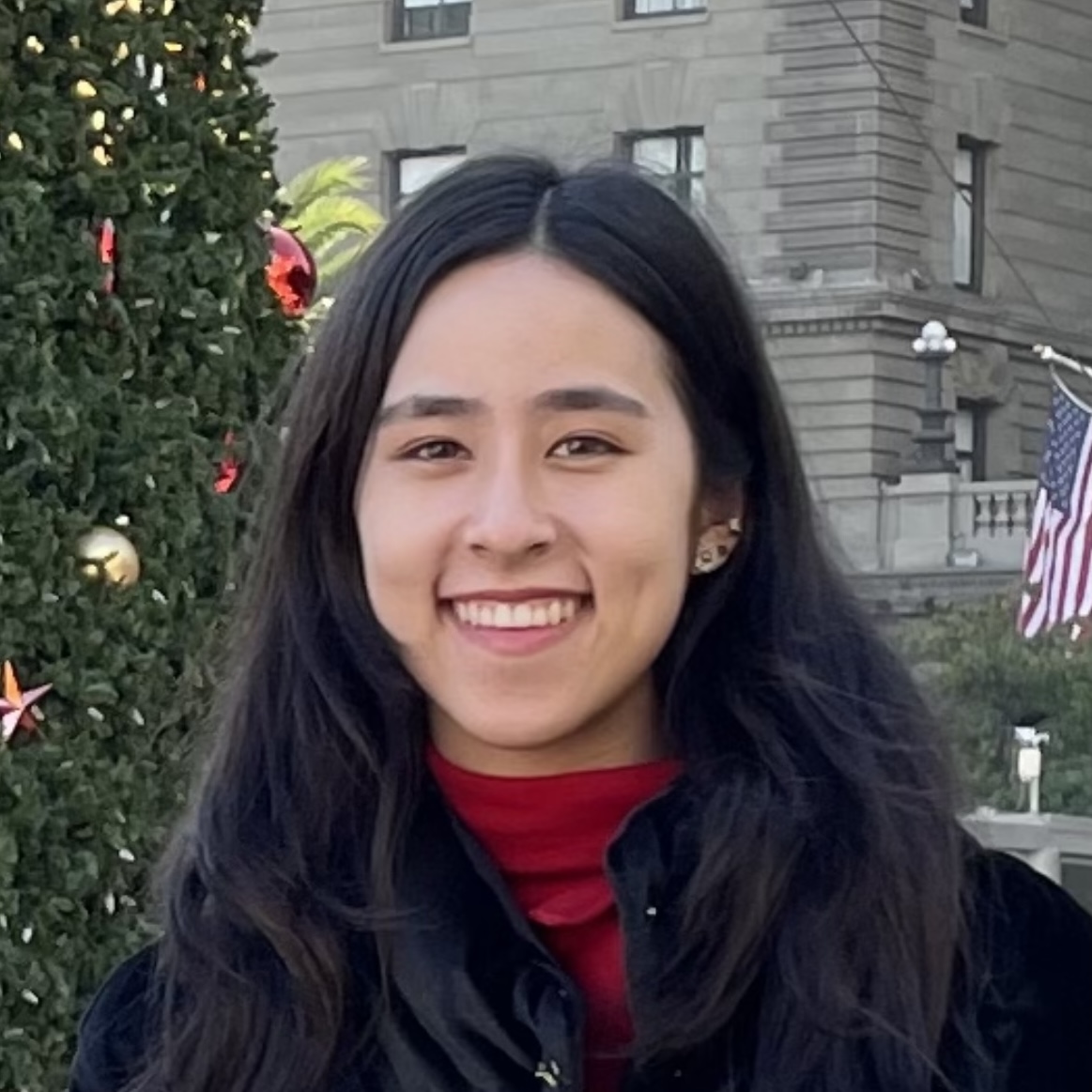
Jacqueline Mitchell
Ph.D. Student, University of Southern California

Amanda Liu
Ph.D. Student, Massachusetts Institute of Technology

Zhe Ye
Ph.D. Student, University of California at Berkeley

Xiaodong Liu
Senior Principal Researcher and Research Manager, Microsoft
Competition Chairs

Varun Pant
Engineering & Product Leader, Amazon Web Services

Simon Frieder
University of Oxford, AIMO

Jialin (Mike) Lu
Simon Fraser University
Sponsors
Gold Tier (A-Z by Name)




Silver Tier

Call for Sponsorships
Sponsor the workshop that brings machine learning and formal methods into one room.
Researchers working across machine learning and formal methods are spread thin over many venues; this full-day NeurIPS 2026 workshop concentrates 200+ of them in one room. Few people are fluent in both proof assistants and modern model training, and every tier reaches accepted-paper authors by email. Sponsorship funds go directly to competition prizes, student travel grants, and the community events that make the day worth attending.
Sponsorship tiers
Gold — $10,000
Five-minute talk at the workshop, seat on the industry panel, recruiting lunch with attendees, named sponsor of the competition prize pool, and 3 sponsored emails to accepted-paper authors.
Silver — $5,000
Roll-up stand at the workshop, one-minute promotional video, 2 sponsored emails to accepted-paper authors, logo on the website, and recognition during opening remarks.
Bronze — $2,500
Logo on the workshop website, recognition during opening remarks, and 1 sponsored email to accepted-paper authors.
Read the full details
Tier benefits, planned use of funds, and key dates.